
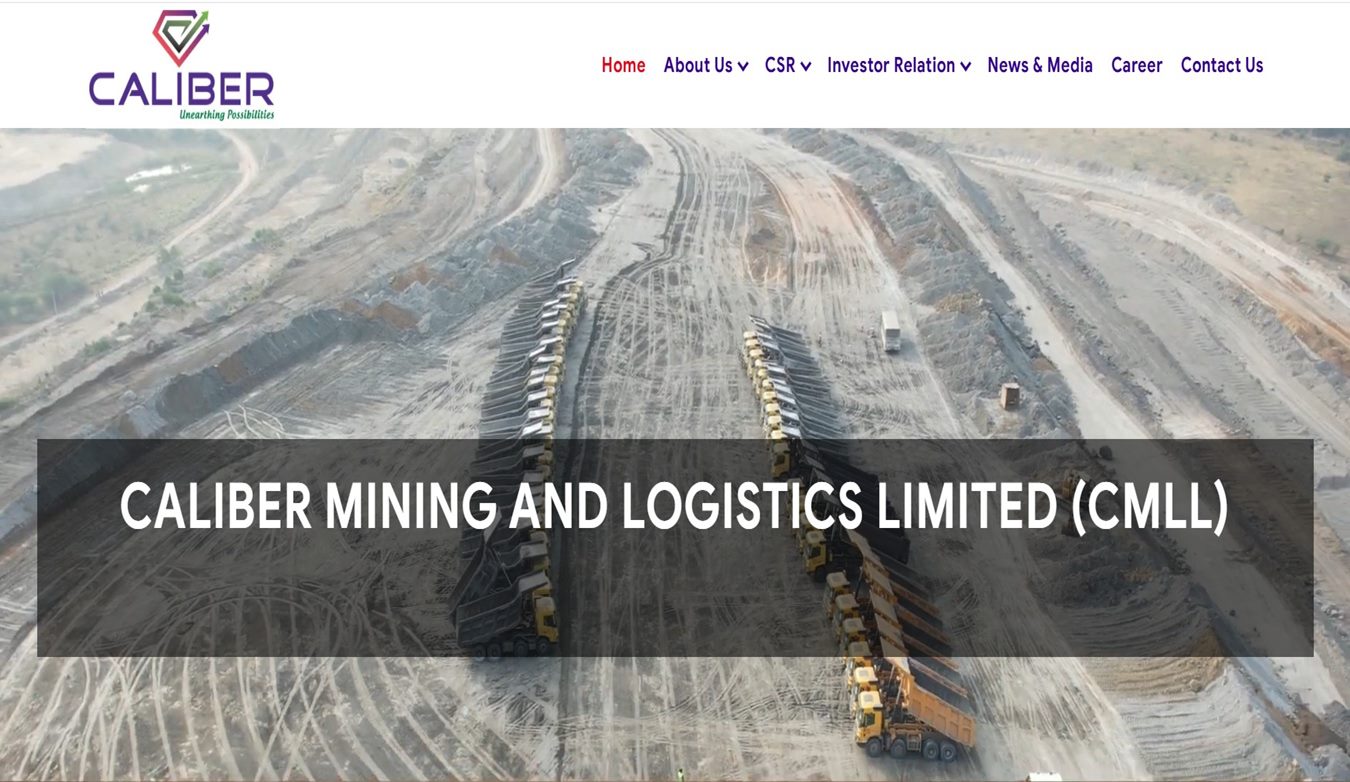
Caliber Mining and Logistics Limited (CMLL) has moved from a Chandrapur-based contract mining specialist to a mainboard IPO candidate seeking roughly ₹450 crore at a post-issue valuation near ₹2,772 crore. For a company with 35+ years of operating history in India’s coal belt, that transition raises the obvious strategic question: what exactly are CMLL’s competitive strengths, and where is it exposed? This SWOT analysis breaks the business down using a consulting-grade framework — strengths, weaknesses, opportunities, and threats — then translates each finding into a strategic implication, not just a list.
Company Snapshot: Who Is CMLL?
| Founded | 2014 (as Caliber Mercantile Private Limited), Chandrapur, Maharashtra |
| Core business | Contract coal mining, overburden (OB) removal, coal & iron ore logistics, rake loading, rail coordination, coal trading |
| Fleet size | ~1,900+ owned and leased vehicles (tippers, loaders, excavators, tip trailers) |
| FY26 revenue | ₹1,684.66 crore (up from ₹957.92 crore in FY24) |
| Order book | ₹9,550 crore (as of May 2026) |
| Anchor clients | Western Coalfields Ltd (WCL), Northern Coalfields Ltd (NCL), Adani Power, GMR Warora Energy, Dhariwal Infrastructure |
| Ownership model | Asset-heavy contractor — does not own any mines itself |
Methodology: An AI-Assisted, Consulting-Style Approach
This analysis was researched and structured with AI-assisted tools to synthesize CMLL’s RHP disclosures, IPO commentary, and public filings into a single decision-ready framework. The approach mirrors how a strategy consultancy would build a SWOT: each factor is tied to a specific, sourced data point rather than a generic industry assumption, and each is followed by a “strategic implication” — the so-what for management, investors, or partners. As with any AI-assisted research output, readers evaluating an investment decision should cross-check the underlying RHP and consult a licensed financial advisor.
Strengths
1. Three-Decade Operating Track Record at Scale
CMLL ranks among India’s top 10 contract mining operators, with an integrated model spanning coal extraction, overburden removal, logistics, rake loading, rail coordination, and coal trading under a single contract structure. Few competitors offer this breadth of end-to-end service under one roof.
Strategic implication: Integration reduces the number of vendors a mine owner needs to coordinate, which is a meaningful switching-cost advantage when contracts come up for renewal.
2. Large, Asset-Heavy Fleet Backed by In-House Maintenance
The company operates roughly 1,900 owned and leased vehicles — tippers, loaders, excavators, and tip trailers — supported by in-house workshops and maintenance teams as of April 2026.
Strategic implication: Owning execution capacity (rather than subcontracting it) lets CMLL bid confidently on large, multi-year tenders where mobilization speed and uptime reliability are scored criteria.
3. Strong Revenue and Profit Growth
Revenue grew from ₹957.92 crore in FY24 to ₹1,684.66 crore in FY26, a CAGR of roughly 32–33%, while net profit rose from ₹95.90 crore to ₹157.90 crore over the same period. Net worth nearly doubled, from ₹295.93 crore to ₹647.54 crore.
Strategic implication: Consistent top- and bottom-line growth, alongside a strengthening balance sheet, supports the company’s ability to bid for larger contracts and absorb working-capital swings tied to seasonal mining cycles.
4. Long-Standing Relationships With Coal India Subsidiaries
CMLL’s largest customers are WCL and NCL, both subsidiaries of Coal India Limited, alongside private players like Adani Power, GMR Warora Energy, and Dhariwal Infrastructure.
Strategic implication: Deep, multi-year relationships with PSU clients provide a stable contracting relationship, though (as covered under Weaknesses) this cuts both ways.
5. Healthy, Multi-Year Order Book
An order book of ₹9,550 crore as of May 2026 gives revenue visibility that stretches several years beyond the IPO itself.
Strategic implication: This order book is the single strongest data point supporting near-term revenue predictability, and it’s a key figure for investors to track quarter-over-quarter for execution progress.
Weaknesses
1. High Customer Concentration
CMLL’s top three customers accounted for roughly 90% of FY26 revenue, and contracts above ₹1,000 crore contributed about 76% of FY26 revenue.
Strategic implication: The loss, non-renewal, or repricing of even one large contract could materially swing revenue — this is arguably the single largest risk factor in the business.
2. Geographic Concentration
Operations are limited to Maharashtra, Madhya Pradesh, and Chhattisgarh, with Maharashtra alone contributing about 55% of FY26 revenue.
Strategic implication: A regional regulatory change, local disruption, or mine-specific slowdown in Maharashtra would disproportionately affect overall performance.
3. Elevated Leverage
The debt-to-equity ratio stood at approximately 1.63 as of March 2026, a level that raised specific concern in independent IPO reviews.
Strategic implication: While a portion of IPO proceeds is earmarked for debt reduction, the company’s capital-intensive, fleet-heavy model will likely require continued borrowing to fund growth — interest rate sensitivity is a real factor here.
4. Contingent Liabilities
Consolidated contingent liabilities stood at ₹458.53 crore as of March 2026, flagged in third-party reviews as a point of concern.
Strategic implication: These represent potential, not certain, future cash outflows — but they’re worth monitoring in subsequent annual filings.
5. No Mine Ownership; Fully Tender-Dependent
CMLL operates purely as a contractor and does not own any of the mines it works. Its business model runs entirely on winning and renewing tenders.
Strategic implication: Revenue visibility, however healthy today, is only as durable as the next tendering cycle — this is a structurally different risk profile than an asset-owning mining company.
6. Seasonality
Open-cast mining activity slows during the monsoon season, creating uneven revenue distribution across the fiscal year.
Strategic implication: Quarter-on-quarter comparisons should account for seasonal effects rather than being read as a straight-line growth or slowdown signal.
Opportunities
1. Policy Tailwinds for Private Mining Participation
Reforms such as the Mines and Minerals Amendment Act and India’s broader Vision 2030 coal roadmap are designed to encourage greater private-sector participation in contract mining.
Strategic implication: As Coal India and state entities lean more heavily on outsourced mining and logistics partners, established players like CMLL are well positioned to capture incremental tender volume.
2. Geographic Expansion Into Odisha and Jharkhand
Industry commentary points to CMLL’s potential expansion into new coal-producing states beyond its current three-state footprint.
Strategic implication: New geographies would directly address the geographic concentration weakness above, while opening access to fresh tender pipelines.
3. Diversification Into Iron Ore Logistics
CMLL began iron ore logistics operations in Fiscal 2023 and has grown that segment since, offering a revenue stream that isn’t purely coal-linked.
Strategic implication: Even modest growth here reduces the company’s near-total dependence on coal-sector demand cycles and regulatory sentiment.
4. IPO Proceeds Earmarked for Debt Reduction and Fleet Expansion
Of the ₹450 crore IPO (comprising a ₹400 crore fresh issue and a ₹50 crore offer for sale), a portion is specifically allocated to debt repayment, with the balance supporting growth capital.
Strategic implication: A cleaner balance sheet post-listing could improve financing terms for future fleet purchases, directly supporting execution capacity against the swelling order book.
5. Structural Coal Demand in India’s Energy Mix
Coal continues to generate roughly three-fourths of India’s electricity, keeping underlying demand for contract mining and logistics services structurally high in the medium term.
Strategic implication: Despite global energy-transition narratives, India’s near-to-medium-term coal dependence provides a longer runway for CMLL’s core business than headline ESG concerns might suggest.
Threats
1. Operational Disruption Risk
Flooding, equipment breakdowns, and disruptions to fuel or water supply can directly increase production costs and reduce output.
Strategic implication: Given the fleet-heavy, physically distributed nature of operations, downtime risk is a recurring, non-trivial cost variable rather than a one-off event.
2. Rising Input Costs
Increases in fuel, power, or spare-parts costs — or supply shortages in any of these — can raise operating expenses and compress margins.
Strategic implication: Margin resilience depends heavily on how much of this cost inflation can be passed through in contract pricing versus absorbed internally.
3. Regulatory and Sector-Specific Exposure
With coal mining contributing over 86% of revenue, CMLL’s fortunes are closely tied to coal-sector regulation, environmental policy, and demand shifts.
Strategic implication: Any acceleration in India’s energy-transition policy, or tightening of environmental clearances for coal mining, would hit CMLL more directly than a diversified logistics player.
4. Tender-Based Revenue Volatility
Because the business model depends entirely on winning tenders rather than owning long-term concessions, future contract wins are inherently uncertain, which can introduce volatility beyond the current order book’s visibility window.
Strategic implication: The current healthy order book is a snapshot, not a guarantee — sustained new-contract wins are required to maintain growth once existing contracts run their course.
5. Competitive Intensity
CMLL competes with other contract mining and logistics players for the same limited pool of large government and private tenders.
Strategic implication: Pricing discipline in future tenders will be a key signal of whether CMLL can maintain margins as it scales, or whether competitive bidding erodes profitability.
SWOT Matrix at a Glance
Strengths
| Weaknesses
|
Opportunities
| Threats
|
Strategic Recommendations (TOWS Perspective)
Moving from analysis to action, a TOWS-style framing shows how CMLL’s strengths and weaknesses interact with its opportunities and threats:
- Strength × Opportunity: Use the strengthened balance sheet and existing fleet scale to bid aggressively for tenders in Odisha and Jharkhand, extending the order book beyond the current three-state footprint.
- Weakness × Opportunity: Direct IPO proceeds not just toward debt reduction, but explicitly toward client and geographic diversification, so the balance-sheet cleanup and concentration-risk reduction happen in parallel.
- Strength × Threat: Leverage the in-house maintenance capability to build monsoon and equipment-failure contingency buffers, protecting order-book execution from the operational risks outlined above.
- Weakness × Threat: Accelerate the iron ore logistics push and pursue non-Coal-India clients simultaneously — this addresses customer concentration and sector-regulatory exposure with a single strategic move.
Key Takeaways
- CMLL is a scaled, integrated contract mining and logistics operator with genuine growth momentum and a strong near-term order book.
- Its biggest structural vulnerability is concentration — in customers, in geography, and in the coal sector itself.
- Leverage and contingent liabilities warrant monitoring in post-IPO quarterly filings.
- Diversification (new states, iron ore logistics) is the clearest lever management has to convert current strengths into a more resilient long-term business.
Frequently Asked Questions
What does Caliber Mining and Logistics Limited (CMLL) actually do?
CMLL is a contract mining and logistics operator that performs coal extraction, overburden removal, coal and iron ore logistics, rake loading, and rail coordination for mine owners — primarily Coal India subsidiaries — without owning any mines itself.
Is CMLL profitable?
Yes. Net profit grew from ₹95.90 crore in FY24 to ₹157.90 crore in FY26, alongside consistent revenue growth over the same period.
What is CMLL’s biggest risk factor?
Customer concentration is the most cited risk: roughly 90% of FY26 revenue came from just three customers, meaning the loss or repricing of a single major contract could have an outsized impact on results.
Does CMLL own any coal mines?
No. CMLL operates purely as a contractor, performing extraction and logistics services on behalf of mine owners under tender-based agreements.
Is CMLL diversifying beyond coal?
Yes, gradually. It entered iron ore logistics in Fiscal 2023 and continues to grow this segment, though coal mining still contributes the large majority of revenue.
Disclaimer
This article is for informational and educational purposes only and does not constitute investment, financial, or legal advice. It draws on Caliber Mining and Logistics Limited’s Red Herring Prospectus (RHP) and publicly available IPO commentary as of July 2026, synthesized with AI-assisted research tools. Figures such as pricing, subscription levels, and grey market premium change rapidly during an active IPO window — verify current data independently and consult a SEBI-registered financial advisor before making any investment decision.


