MED-EL Medical Electronics is an Austrian medical technology company specializing in hearing implants and other solutions for people with hearing loss. Headquartered in Innsbruck, Austria, the company has developed its business around cochlear implants, middle ear implants, electric acoustic stimulation systems, auditory brainstem implants and bone conduction technologies.
Founded by researchers Ingeborg and Erwin Hochmair, MED-EL traces its technological roots to cochlear implant research that began in the 1970s. The successful implantation of a multichannel microelectronic cochlear implant in Vienna in 1977 was a significant milestone in the development of modern cochlear implant technology. The company hired its first employees in 1990.
MED-EL operates in a specialized healthcare market where technological innovation, clinical evidence, product reliability, regulatory compliance and long-term patient support are important competitive factors. Its position depends not only on developing advanced hearing systems but also on maintaining relationships with surgeons, audiologists, hospitals, rehabilitation professionals and implant recipients.
The company remains privately owned and reports a global presence spanning 142 countries, with more than 3,300 employees and a network of clinics using its hearing implants. Its business model benefits from a long-term research focus, although private ownership means detailed financial performance is not as readily available as it is for publicly listed medical technology companies.
This SWOT analysis examines MED-EL’s internal strengths and weaknesses alongside the external opportunities and threats that may influence its future growth. It also considers competitive pressure, technological change and the importance of access to hearing healthcare.
2. MED-EL Company Overview
| Company attribute | Details |
|---|---|
| Company name | MED-EL Medical Electronics |
| Legal entity | MED-EL Elektromedizinische Geräte GmbH |
| Headquarters | Innsbruck, Austria |
| Founders | Ingeborg and Erwin Hochmair |
| Industry | Medical technology and hearing implants |
| Ownership | Privately owned |
| Core products | Cochlear implants, middle ear implants, bone conduction systems, auditory brainstem implants and associated audio processors |
| Global presence | 142 countries, according to company information |
| Key markets | Hearing healthcare, cochlear implantation and specialist auditory rehabilitation |
| Major competitors | Cochlear Limited and Advanced Bionics, part of Sonova, among others |
Source: MED-EL’s official company profile and corporate information.
MED-EL’s broad product portfolio is strategically important because hearing loss varies in severity, cause and anatomical characteristics. Different patients may require different technologies, and the most appropriate treatment depends on clinical assessment rather than brand preference alone.
The company also operates in India through MED-EL India Private Limited, supporting its presence in a large market where awareness, affordability, specialist availability and access to rehabilitation remain important considerations.
3. MED-EL SWOT Analysis at a Glance
Strengths
• Long-standing implant research heritage
• Broad hearing technology portfolio
• Global clinical presence
• Long-term product support focus
Weaknesses
• Limited public financial transparency
• Dependence on specialist care networks
• Complex patient treatment journey
• Affordability barriers in some markets
Opportunities
• Underserved hearing loss populations
• Emerging-market expansion
• Remote care and connectivity
• Product miniaturization and innovation
Threats
• Established global competitors
• Regulatory and clinical risks
• Reimbursement and affordability limits
• Rapid technological change
4. Strengths of MED-EL GmbH
4.1. Strong research heritage and technological expertise
MED-EL’s history is closely connected to the development of modern cochlear implant technology. Its founders’ research into electrical stimulation of auditory nerve fibres helped establish the technical foundation for multichannel cochlear implants.
This research heritage gives the company an established engineering and scientific base. Hearing implants require expertise across electronics, signal processing, materials science, implant design and clinical application. Experience accumulated across these disciplines can support the development of new products and refinements to existing systems.
MED-EL also reports continued investment in research and development, including collaboration with universities and research institutions. Its company profile states that it invests approximately 15% to 20% of turnover in R&D. Because the company is privately owned, this figure should be understood as a company-reported metric rather than independently audited public-company disclosure.
Strategic significance: Sustained research capabilities can help MED-EL differentiate its products, respond to changing clinical needs and develop technologies that are difficult for less specialized competitors to replicate quickly.
4.2. Broad portfolio of hearing implant technologies
MED-EL offers more than cochlear implants alone. Its portfolio includes electric acoustic stimulation, middle ear implants, auditory brainstem implants and implantable and non-implantable bone conduction solutions. It also provides external audio processors and connectivity accessories.
This portfolio supports a broader approach to hearing rehabilitation. Depending on the patient’s diagnosis, anatomy and hearing profile, clinicians may consider different types of devices rather than relying on a single technology.
A diversified portfolio can also reduce dependence on one product category and create opportunities to serve different clinical segments.
Strategic significance: MED-EL can compete across multiple hearing technology categories while building relationships with specialist healthcare providers who manage patients with different forms of hearing loss.
4.3. Established international presence
MED-EL reports that its hearing implants are used in 142 countries and that more than 95% of its hearing implants are exported. The company also reports a workforce of more than 3,300 people. These figures indicate an established international operating network, although they do not independently establish market share or profitability.
An international presence can help the company develop relationships with hospitals, implant centres, surgeons, audiologists and local distributors. It can also support product education, technical assistance and the management of patient needs after implantation.
In medical technology, distribution and clinical support are particularly important because purchasing decisions often involve multiple stakeholders rather than an individual consumer alone.
Strategic significance: A broad international network can help MED-EL reach more patients, support local clinical teams and expand in markets where hearing implant services are developing.
4.4. Focus on long-term product reliability and compatibility
Hearing implants are long-term medical devices. Patients and healthcare professionals need confidence in device reliability, access to technical support and continuity of care over many years.
MED-EL emphasizes implant reliability, backwards compatibility and the continued availability of compatible external processors. The company also publishes implant survival information using recognized reporting standards. Its latest-generation titanium implant systems have a company-reported cumulative survival rate exceeding 99%, based on data stated to be current as of January 2, 2026. This is a manufacturer-reported measure and should not be interpreted as a guarantee of individual patient outcomes or as a direct comparison with competitors.
A focus on long-term compatibility can be important for recipients who may need newer external processors without automatically replacing the implanted component.
Strategic significance: Reliability information and continued product support can strengthen trust among clinicians, patients and healthcare institutions, although actual performance must be assessed using comparable evidence and relevant product-specific data.
4.5. Product development focused on everyday usability
MED-EL has continued to develop features intended to make hearing systems easier to use in daily life. These include wireless connectivity, compact processor designs, rechargeable power options and remote-care capabilities.
For example, the company’s SONNET 3 processor incorporates direct streaming and other usability features. MED-EL has also introduced the HearCare app to support remote fitting and configuration backups for compatible devices.
These features matter because hearing technology must work in varied environments, including conversations, education, workplaces and family settings. Convenience, comfort and access to support can influence how patients experience their devices.
Strategic significance: Continued attention to usability may help MED-EL differentiate its systems beyond implant hardware alone.
5. Weaknesses of MED-EL GmbH
The weaknesses discussed below are strategic considerations based on the company’s business model and the broader hearing implant industry. They should not be interpreted as proof of internal operational failures.
5.1. Limited public financial transparency
MED-EL is privately owned and does not provide the same level of routine investor-facing financial disclosure as a publicly listed company. Publicly accessible company information provides useful details about its products, workforce, research activities and geographical presence, but it offers less information for evaluating revenue growth, operating margins, cash generation and product-level profitability.
This limits the ability of external analysts to assess MED-EL’s financial performance against publicly traded competitors on a fully comparable basis.
The lack of readily available financial detail does not itself indicate weak financial health. It simply makes independent financial benchmarking more difficult.
Strategic implication: Investors, suppliers and other external stakeholders may need additional disclosures or direct company information to evaluate the business’s financial position.
5.2. Dependence on specialist clinical infrastructure
Cochlear and other hearing implants require more than the sale of a medical device. Patients generally need appropriate clinical evaluation, surgery where indicated, device programming, auditory rehabilitation and continued follow-up.
The availability of qualified surgeons, audiologists, rehabilitation professionals and specialist facilities therefore influences how quickly implant technology can reach patients.
MED-EL’s international footprint provides a foundation for distribution and clinical engagement, but the presence of a product in a country does not mean that specialist services are equally accessible throughout that market.
Strategic implication: Expanding access requires investment in professional training, clinical partnerships and local support, not just product distribution.
5.3. High barriers to patient adoption
Hearing implants can involve substantial treatment costs and a lengthy clinical journey. The total financial burden may include the implant system, surgery, assessments, processor accessories, rehabilitation and ongoing maintenance.
The actual cost varies by country, healthcare provider, product configuration and insurance or public funding arrangements. Consequently, affordability can be a barrier even when the technology is clinically appropriate.
This challenge may be particularly relevant in price-sensitive markets, where many patients have limited insurance coverage or must pay directly for treatment.
Strategic implication: MED-EL’s ability to reach more eligible patients depends partly on financing arrangements, public healthcare support, patient education and the availability of affordable treatment pathways.
5.4. Complex product portfolio and support requirements
A broad product range creates opportunities but also adds operational complexity. Different implant families, audio processors, accessories, clinical protocols and regional approvals require careful management.
Healthcare professionals need training to understand the indications, limitations and technical characteristics of different systems. Patients also need clear information about compatibility, connectivity, maintenance and available support.
The company must therefore balance portfolio expansion with simplicity in product selection and long-term service delivery.
Strategic implication: Effective training, documentation, customer support and product lifecycle management are essential to ensuring that a broad portfolio remains a competitive advantage.
5.5. Private ownership may limit external financial benchmarking
Private ownership can support a long-term research strategy without the same public-market reporting obligations faced by listed companies. However, it also means analysts have fewer standardized financial indicators for measuring MED-EL’s competitive position.
Without consistent public data on revenue, market share, capital expenditure and margins, it is difficult to determine precisely how the company compares with competitors on financial scale or investment capacity.
Strategic implication: MED-EL’s technology and clinical presence can be assessed using public information, but its relative financial strength should not be overstated without comparable financial evidence.
6. Opportunities for MED-EL GmbH
6.1. Expanding access to underserved hearing loss populations
The global need for hearing healthcare creates a substantial long-term opportunity for specialized medical technology companies. The World Health Organization reported in March 2026 that more than 430 million people require rehabilitation for disabling hearing loss, with the number projected to exceed 700 million by 2050. These figures cover hearing rehabilitation broadly and should not be interpreted as the number of people eligible for cochlear implants.
MED-EL can benefit from this need by supporting earlier diagnosis, improving awareness of treatment options and working with healthcare providers to identify appropriate candidates for implant-based rehabilitation.
Potential areas for growth include:
- Educational programmes for patients and families.
- Training for ENT surgeons, audiologists and rehabilitation professionals.
- Partnerships with hospitals and specialist implant centres.
- Improved access to follow-up care and rehabilitation.
- Collaboration with public health programmes and charitable organizations.
Opportunity assessment: The long-term growth opportunity is significant, but converting unmet medical need into demand for MED-EL products depends on clinical suitability, affordability, service availability and healthcare funding.
6.2. Growth in India and other emerging markets
India offers a potentially important growth market because its population is large and access to specialized hearing healthcare varies considerably by location and income.
MED-EL already has an Indian presence, and its SONNET 3 audio processor was launched in India in September 2026, according to industry publication Express Healthcare. The processor includes direct streaming from compatible smartphones, dual microphones and other usability features.
Further growth could come from partnerships with private hospitals, government healthcare institutions, charitable organizations and rehabilitation centres. Better coordination between screening, diagnosis, surgery and post-implant support could help more clinically eligible patients access treatment.
MED-EL could also explore patient education initiatives in regional languages and professional training programmes outside major metropolitan centres.
However, growth should not be assumed solely from India’s population size. Purchasing power, public funding, clinical capacity and competing treatment priorities all influence adoption.
Opportunity assessment: India and other underserved markets offer expansion potential, particularly if MED-EL combines product availability with practical access programmes and sustainable clinical partnerships.
6.3. Remote care and digital hearing services
Digital health tools can help improve continuity of care for patients who live far from specialist centres or face difficulty attending frequent appointments.
MED-EL’s HearCare app supports remote fitting and configuration backups for compatible products. Such capabilities provide a foundation for further digital service development.
Potential areas for expansion include:
- Remote support for compatible device settings.
- Digital education for patients and caregivers.
- Better coordination between implant centres and rehabilitation providers.
- Simplified troubleshooting and device support.
- Secure digital tools for monitoring relevant aspects of the care journey.
Remote services cannot replace every in-person clinical assessment, and their usefulness depends on product compatibility, local regulations, connectivity and clinical workflows.
Opportunity assessment: Digital care could help MED-EL improve patient convenience and support efficiency while strengthening its relationships with healthcare providers.
6.4. Growth through fully implantable hearing technology
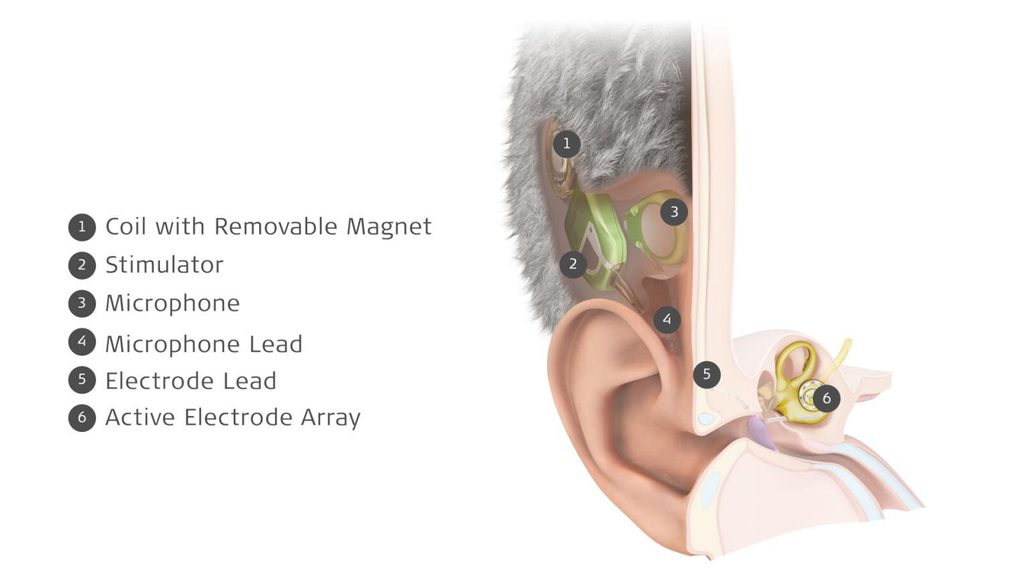
One of MED-EL’s most important recent developments is TICI UNICO, announced on September 29, 2026. The company describes it as a fully implantable cochlear implant with all components, including the microphone, beneath the skin. Unlike conventional cochlear implant systems with externally worn processors, the design aims to provide access to sound without external components.
MED-EL announced that TICI UNICO received CE Mark approval and was being introduced in selected European markets. The company also stated that the device was not approved by the US Food and Drug Administration and was not available for sale or use in the United States at the time of its announcement. Availability and regulatory status can vary by market.
Source: vir.com.vn
The technology could create a new product category for suitable candidates who prefer a hearing solution without externally worn components. It may also attract attention from clinicians and patients interested in convenience, appearance and continuous access to sound.
However, the commercial opportunity will depend on clinical evidence, patient selection, long-term reliability, regulatory approvals, cost and clinician adoption. The product’s launch does not yet establish its long-term commercial success.
Opportunity assessment: TICI UNICO offers a potential point of differentiation and may help MED-EL expand the range of hearing implant options available to eligible patients.
6.5. Continued innovation in connectivity and patient experience
Patients increasingly expect medical devices to work smoothly with the digital tools they already use. For hearing implants, this can include smartphone connectivity, audio streaming, simplified controls and improvements in processor comfort.
MED-EL’s SONNET 3 and RONDO product families demonstrate the company’s ongoing attention to connectivity and wearable design. The company has also continued to introduce improvements to rechargeable batteries and external processor features.
Further innovation could focus on improving listening experiences in challenging environments, extending battery convenience, strengthening accessibility and simplifying device management.
Opportunity assessment: Better everyday usability can support product differentiation, provided that new features deliver meaningful benefits and remain compatible with clinical needs.
7. Threats Facing MED-EL GmbH
7.1. Strong competition from established hearing implant manufacturers
MED-EL competes with established companies in the cochlear implant industry, particularly Cochlear Limited and Advanced Bionics.
These competitors have established products, clinical relationships and international distribution networks. Public corporate filings from other industry participants identify these manufacturers as major competitors in the cochlear implant market.
Competition can involve more than sound processing or implant design. Manufacturers also compete on clinician training, product reliability, processor connectivity, service quality, compatibility and long-term recipient support.
MED-EL’s broad portfolio and research heritage provide differentiating factors, but competitors can also introduce new technologies and improve existing products.
Threat assessment: Sustained competitive pressure requires continued innovation, evidence-based product development and strong relationships with clinical professionals.
7.2. Regulatory requirements and clinical evidence
Hearing implants are regulated medical devices. Product development and commercialization may require clinical evidence, quality management, regulatory submissions and post-market monitoring.
Requirements differ across jurisdictions, and regulatory clearance in one region does not automatically authorize a product in another.
The introduction of fully implantable technology illustrates this challenge. Although MED-EL announced CE Mark approval for TICI UNICO in September 2026, the company stated that the product was not approved for sale or use in the United States at that time.
Delays in approvals, changing regulatory requirements or the need for additional clinical evidence can affect launch schedules and increase development costs.
Threat assessment: MED-EL must continue to demonstrate safety, performance and compliance while adapting to different regulatory systems.
7.3. Affordability and reimbursement challenges
The cost of hearing implants and the associated treatment journey can restrict access, especially where insurance coverage is limited or patients must finance treatment themselves.
Even when a device is clinically suitable, families may face additional expenses related to assessments, surgery, rehabilitation, accessories and long-term follow-up.
Healthcare systems also differ in how they evaluate and reimburse implant technologies. Budget constraints can influence purchasing decisions by hospitals and public health authorities.
Threat assessment: Limited reimbursement and patient affordability can constrain sales growth and reduce the number of eligible patients who ultimately receive treatment.
7.4. Technological change and competing treatment approaches
The hearing healthcare market continues to evolve through advances in implant engineering, signal processing, connectivity, materials and digital rehabilitation.
Competitors may introduce products that offer improved usability or features that appeal to specific patient groups. At the same time, conventional hearing aids, other implantable devices and emerging treatment approaches may compete for clinical attention and healthcare resources, depending on patient needs.
Fully implantable devices such as TICI UNICO also introduce new engineering and clinical considerations. Performance, power management, long-term maintenance and suitability across different patient groups will influence the commercial development of this category.
Threat assessment: MED-EL must innovate continuously while ensuring that new technologies deliver reliable and clinically meaningful improvements.
7.5. Dependence on specialist awareness and treatment infrastructure
A medical device company cannot expand its patient base simply by making products available. Clinicians need to recognize appropriate candidates, patients must understand their options, and healthcare systems must provide the required treatment and rehabilitation.
In regions where screening, referral pathways or specialist services are limited, patients may remain untreated despite the availability of hearing technologies.
This creates a structural challenge for MED-EL and its competitors alike.
Threat assessment: Slow development of clinical infrastructure and limited awareness could constrain the company’s ability to convert unmet hearing healthcare needs into sustained demand.
8. MED-EL Competitive Position Analysis
The following comparison summarizes the broad positioning of MED-EL relative to two major competitors. It is a qualitative assessment rather than a measured ranking of clinical outcomes or market share.
| Strategic factor | MED-EL | Cochlear Limited | Advanced Bionics |
|---|---|---|---|
| Core specialization | Hearing implants and related hearing solutions | Cochlear implants and hearing solutions | Cochlear implants and hearing solutions |
| Product positioning | Broad portfolio of implantable and non-implantable hearing technologies | Established global cochlear implant business | Cochlear implant portfolio within Sonova |
| Research and development | Long-standing implant research heritage | Established implant technology and product development | Established implant technology and product development |
| Geographic reach | Company reports presence in 142 countries | International market presence | International market presence |
| Ownership structure | Privately owned | Publicly listed company | Part of Sonova |
| Key competitive consideration | Portfolio breadth, research, compatibility and emerging fully implantable technology | Product performance, installed base and clinical relationships | Product innovation, clinical relationships and broader hearing healthcare connections |
Sources: MED-EL corporate information and public company disclosures.
The comparison highlights different strategic models rather than declaring one manufacturer superior. Product suitability, clinical evidence, compatibility, patient preferences and local support arrangements all matter when healthcare professionals evaluate hearing implant systems.
9. Strategic Recommendations for MED-EL
Based on the SWOT analysis, the following priorities could strengthen MED-EL’s competitive position.
1. Maintain a strong research and clinical evidence strategy
Continue investing in implant technology, clinical collaboration and long-term performance evaluation. Clear evidence can help healthcare professionals assess products and distinguish meaningful improvements from marketing claims.
2. Expand access in underserved markets
Build partnerships with hospitals, government programmes, charitable organizations and rehabilitation centres. In India, local-language education and professional training could help address barriers beyond product availability.
3. Develop fully implantable technology responsibly
Evaluate TICI UNICO through ongoing clinical evidence, regulatory expansion and long-term follow-up. Clear patient selection and transparent communication about benefits and limitations will be important as the technology develops.
4. Improve digital support and connectivity
Extend useful remote-care capabilities, simplify compatible device management and strengthen support for patients who live far from implant centres.
5. Strengthen clinician and patient relationships
Invest in training, rehabilitation support, technical service and long-term recipient engagement. In a specialized medical device market, the patient experience extends well beyond the initial procedure.
10. Future Outlook for MED-EL GmbH
MED-EL’s future prospects depend on its ability to sustain technological innovation while making hearing implant treatment accessible to more people who may benefit from it.
The company’s research heritage, broad portfolio and international presence provide a foundation for continued development. Its September 2026 announcement of TICI UNICO is a notable product milestone because it introduces a fully implantable cochlear implant concept in which all components, including the microphone, are placed beneath the skin. The commercial impact will depend on clinical outcomes, regulatory availability, affordability and acceptance by patients and clinicians.
Growth in emerging markets could provide additional opportunities, but it will require local clinical capacity and sustainable funding arrangements. Digital care and processor connectivity may also improve the patient experience, although these capabilities must be evaluated according to their practical benefits and compatibility.
Competition remains a significant challenge. Cochlear Limited and Advanced Bionics have established positions in the same industry, making continuous product development and effective clinical support essential.
Overall, MED-EL appears strategically positioned to participate in the long-term development of hearing implant technology. However, a complete assessment of its financial prospects is limited by the lack of comparable public financial disclosures. The company’s future performance will depend on translating research and product innovation into safe, accessible and clinically valuable hearing solutions.
11. Conclusion
The MED-EL GmbH SWOT analysis shows a specialized medical technology company with a long history in cochlear implant development, a broad hearing solutions portfolio and an established international presence.
Its principal strengths include research expertise, product diversity, long-term reliability initiatives and a focus on patient support. Its main strategic weaknesses are associated with limited public financial transparency, dependence on specialist healthcare infrastructure and the complexity and cost of implant-based treatment.
Important opportunities include expanding access to underserved populations, developing digital hearing services, strengthening its presence in emerging markets and advancing fully implantable technology. At the same time, competition, regulatory requirements, affordability constraints and rapid technological change remain material threats.
MED-EL’s long-term position will depend on more than technological breakthroughs. Its ability to support clinicians, demonstrate clinical value and help patients access appropriate treatment will be equally important.
For business researchers and healthcare industry analysts, MED-EL represents an example of how sustained research, specialized engineering and long-term patient support can shape competition in the medical technology industry.
12. Frequently Asked Questions (FAQs)
What is MED-EL GmbH?
MED-EL GmbH is an Austrian medical technology company headquartered in Innsbruck. It develops hearing implant systems and related technologies for people with different types and degrees of hearing loss.
What are MED-EL’s main strengths?
MED-EL’s main strengths include its long-standing cochlear implant research heritage, broad hearing technology portfolio, international presence, focus on implant reliability and ongoing product development.
What are the main weaknesses of MED-EL?
Key strategic limitations include limited public financial transparency, dependence on specialist clinical infrastructure, affordability barriers and the complexity of supporting a diverse range of medical devices.
Who are MED-EL’s main competitors?
Its major competitors in the cochlear implant market include Cochlear Limited and Advanced Bionics, which is part of Sonova. Competition varies by product category and geographic market.
What opportunities could support MED-EL’s growth?
Potential opportunities include improving access to hearing implants, expanding in emerging markets, developing digital hearing care services, improving connectivity and advancing fully implantable hearing technologies.
What is TICI UNICO?
TICI UNICO is a fully implantable cochlear implant introduced by MED-EL in September 2026. The company says its microphone and other components are placed beneath the skin, removing the need for externally worn components. Its availability and regulatory status depend on the market.
Is MED-EL a publicly traded company?
No. MED-EL describes itself as a privately owned company. Its private ownership means that comprehensive financial information is less readily available to the public than it is for listed medical technology companies.
What is the future outlook for MED-EL?
MED-EL has opportunities to grow through innovation, improved access to hearing care, digital services and emerging technologies. Its performance will depend on clinical evidence, regulatory approvals, affordability, competition and the ability to expand access to appropriate treatment.
Editorial and source note
This analysis was prepared for business and industry research purposes using publicly available company information and industry sources available as of October 2026. Company-reported product capabilities, geographic reach and reliability information are identified as such where relevant. Strategic judgments are analytical assessments, not audited financial conclusions or medical advice.
For further verification, consult the following primary and supporting sources:
- MED-EL official company profile: Company profile and corporate information
- MED-EL: About the company
- MED-EL: Company history and product milestones
- MED-EL: TICI UNICO announcement, September 2026
- World Health Organization: Deafness and hearing loss factsheet
- MED-EL India: India products and contact information